
Jewelry requires detailed review
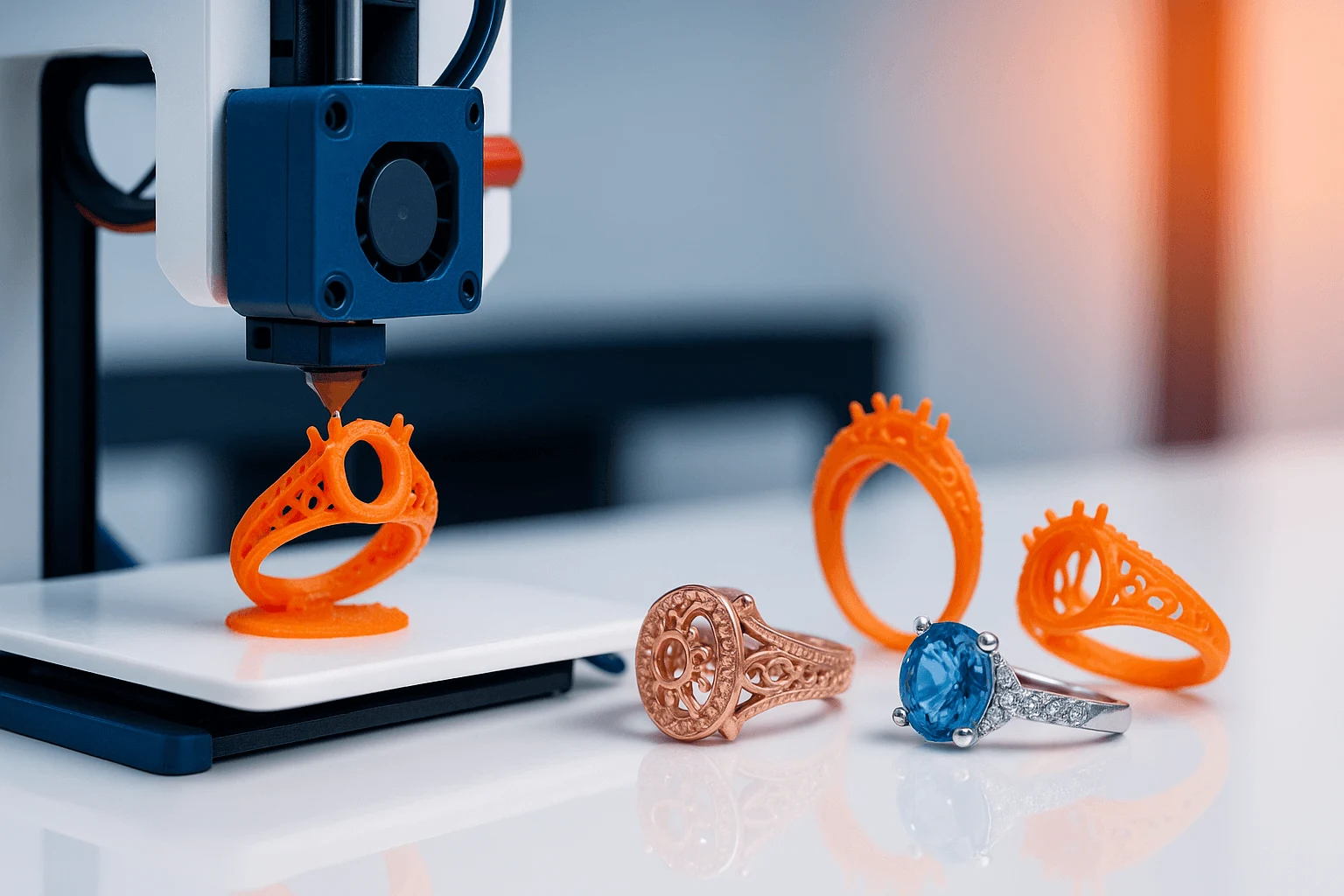
Jewelry is small, precise and highly visual. A ring or pendant may look correct in a render but still need adjustment in thickness, edge softness, stone position or overall proportion. A prototype helps the designer see these issues before the final piece is produced.
From CAD to prototype
The typical workflow starts with a design reference, then moves into CAD modeling. The CAD file is checked for scale, symmetry, wall thickness and surface quality. After that, a prototype can be printed to review the physical form and make practical corrections.
Common printing methods in jewelry
Jewelry prototyping often uses resin-based printing because it can show fine detail. In professional workflows, some printed models are used for visual review, while others may be prepared as castable patterns for lost-wax casting. The chosen method depends on the purpose of the prototype.
Comfort and wearability matter
A good jewelry concept must be wearable. Prototyping helps evaluate whether a ring feels too thick, whether an earring is too heavy, or whether a bracelet shape may be uncomfortable. These checks are part of responsible design, especially for custom pieces.
A better client conversation
A prototype or 3D preview makes communication easier for clients. Instead of imagining the final result from a description, they can see a visible concept, discuss changes and approve the direction with more confidence.
3D printing helps jewelry design become more accurate and client-focused by making small details easier to test before production.
Comments
Share your feedback and reflection about the article topic.
This topic is practical because jewelry design depends on detail, scale and comfort. The prototype stage makes those points easier to evaluate.
The article explains well that a prototype is not only visual. It also helps verify whether the concept is wearable and balanced.