
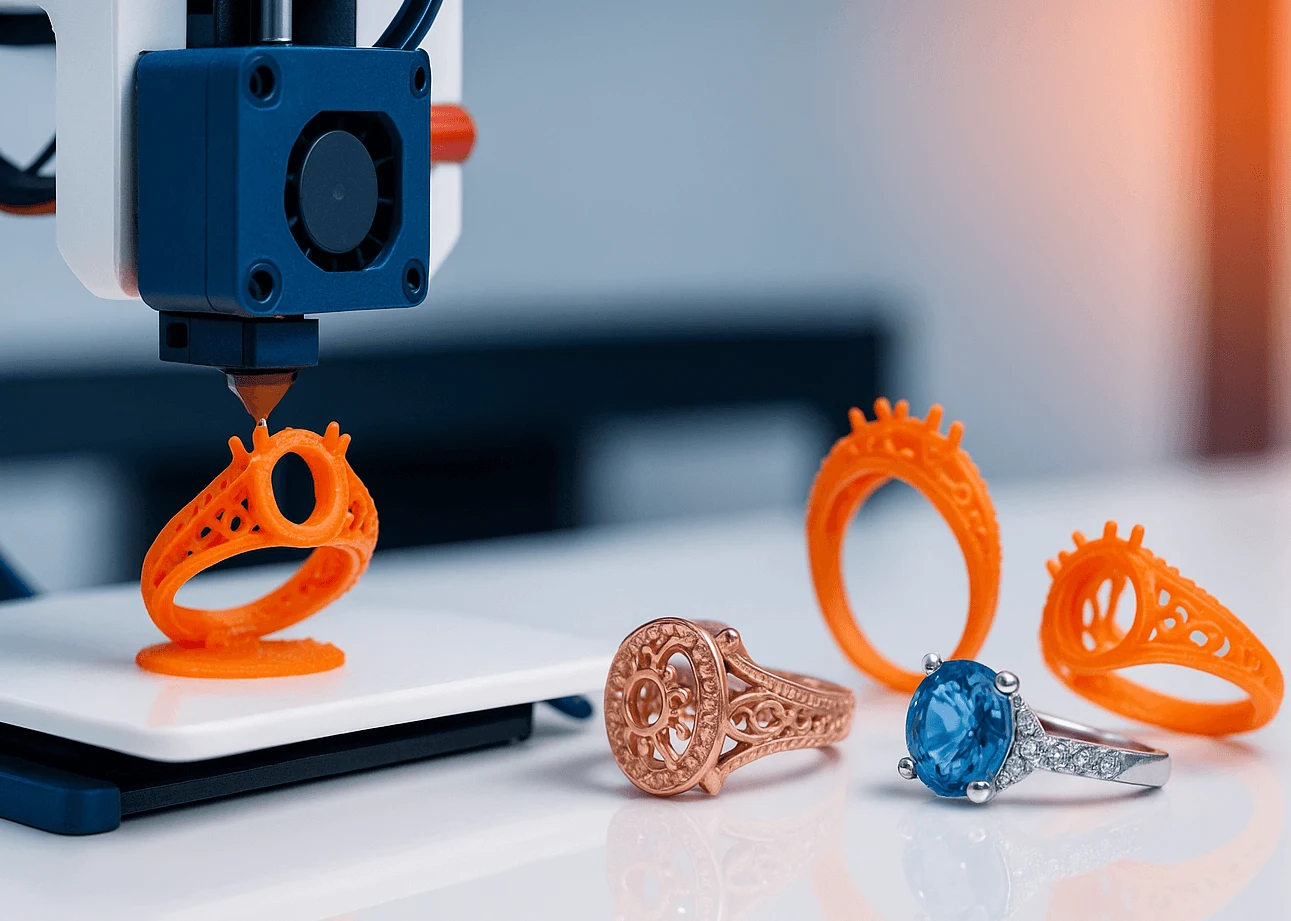
Additive manufacturing builds layer by layer
Unlike subtractive methods that remove material from a block, additive manufacturing builds the form layer by layer. This allows designers to test forms with complex curves, internal spaces and decorative patterns that may be difficult to evaluate from drawings alone.
Different technologies serve different needs
For jewelry, resin-based technologies such as SLA or DLP are often used for detailed prototypes. FDM printing can be useful for rough form studies, but it usually does not show the same level of fine detail. The right method depends on whether the goal is visual review, fit testing or casting preparation.
Design limits still matter
3D printing gives more freedom, but it does not remove all technical limits. Thin walls, fragile details, unsupported shapes and very small features may fail during printing, casting or finishing. This is why prototype review and professional checking remain essential.
Customization becomes easier to explain
Custom jewelry often needs clear communication. Additive manufacturing supports this by turning personal references into visible previews. The client can understand the design direction before committing to a final material or production method.
Technology supports craftsmanship
Digital tools do not replace craftsmanship. They support it by improving planning, testing and communication. The strongest results come when digital modeling, prototype review and traditional finishing knowledge work together.
Additive manufacturing helps jewelry teams test complex ideas earlier while still depending on design judgment and technical review.
Comments
Share your feedback and reflection about the article topic.
This article is useful because it explains that technology supports craftsmanship instead of replacing it.